The best time for the Katla ice cave
Unlike the famous winter caves of Vatnajökull, the Katla ice cave is visited in every month, which is the main reason the tour exists at all. What changes with the season is the light on the drive and the shape of the cave itself. This guide goes through the seasons and the time of day, then how early to book.
A cave for every month
Most of Iceland's famous glacier caves belong to winter. The clear blue caves of Vatnajökull, near Jökulsárlón, are mainly visited in the colder months, roughly November to March. The cave in Kötlujökull, the outlet glacier of Mýrdalsjökull above the Katla volcano, is the exception. Operators in Vík drive out to it all year, so a summer traveler on the South Coast can still stand inside a glacier. Katla or Vatnajökull: which ice cave? compares the two side by side.
Open all year does not mean the same all year. The cave forms where meltwater runs under and through the ice, so it shifts and shrinks with the seasons. When a cave turns unsafe or melts out, the operators switch to another, and Katlatrack reviewers say that company hunts for a fresh one almost every year. Whatever month you choose, expect a cave that looks different from last year's photos.
Long days and meltwater in summer
From about June to August the light hardly leaves. Around the summer solstice South Iceland gets close to 24 hours of daylight, so a late departure is as bright as a morning one. Highs in Vík reach around 12–14 °C (54–57 °F). The black sand of Mýrdalssandur lies bare and the glacial rivers on the way run fuller, which makes the Super Jeep ride feel like a desert crossing with an ice cap waiting at the end.
The trade-off is the cave itself. Warm weather means more meltwater and a cave that can change fast. Recent reviewers show both sides. A July guest with Southcoast Adventure walked through two tunnels, while a September guest on the same tour found the entrance dome had collapsed, leaving only a small part. Summer is also the busiest time to book, so the departure you want can fill weeks before.
Snow and short days in winter
Winter lays snow over the black sand and firms up the ice, and the contrast of white ground against dark ash is at its sharpest. Days are short, though. Around the winter solstice you get only about 4–5 hours of daylight, and winter days in Vík hover around 0–3 °C (32–37 °F), with wind that makes them feel colder.
Storms are the main risk. Strong wind or ice can make the drive or the glacier unsafe, and operators cancel tours when that happens. Build a spare day into a winter trip if the cave matters to you, and check vedur.is for the forecast and road.is for road conditions before you set out. Every main tour has free cancellation up to 24 hours ahead, so a booking on a doubtful day costs little to move. Storm decisions and the volcano itself are covered in our safety guide.
A winter evening in Vík also brings a chance of northern lights, since the village is small and dark once you walk away from the main road. Nobody can promise them. They need a clear sky and solar activity, and neither can be booked, but a cloudless night after the tour deserves a look outside.
The shoulder months
Spring and autumn split the difference. Daylight is longer than in deep winter and changes quickly from week to week, and snow may or may not lie on the sand. From about November, a winter Ring Road trip can take in both Katla and a Vatnajökull cave, with a night near Jökulsárlón between them. In spring the cave in Kötlujökull has come through the cold months, while by late autumn it has had a whole summer of melt behind it. Neither season guarantees anything about its size.
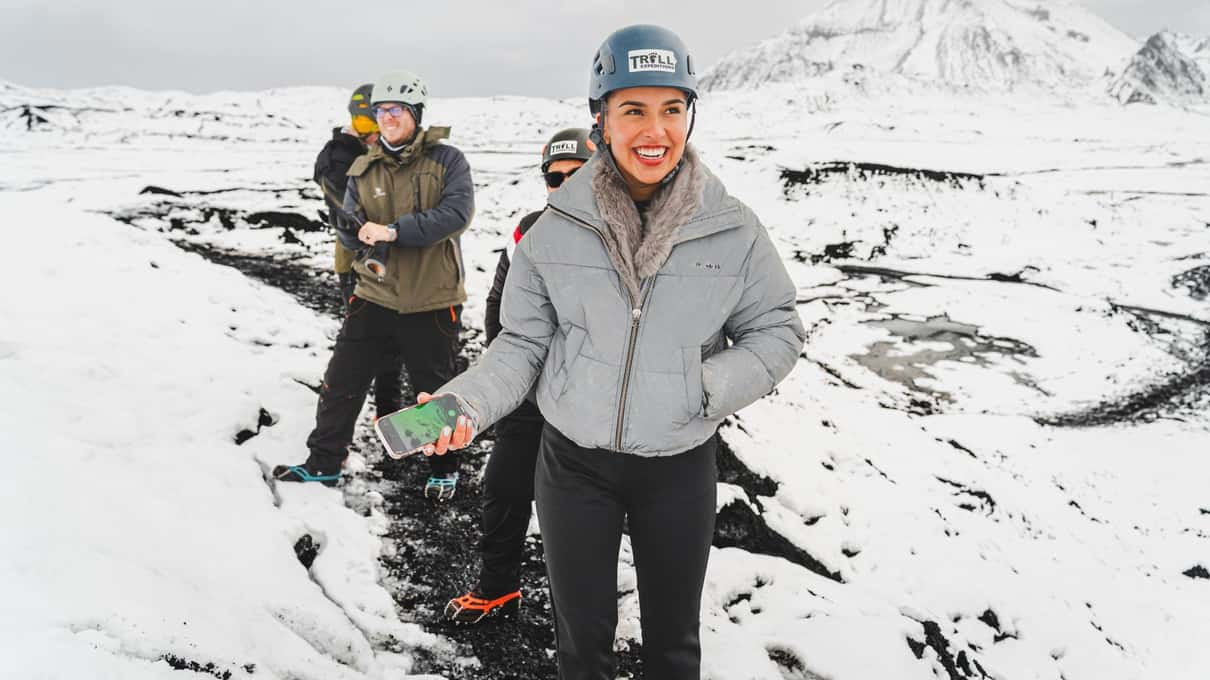
Morning or afternoon
Katlatrack runs several departures a day, which makes it the easiest tour to fit around a drive. Pick the slot by season. In winter a departure near the middle of the day gives you daylight for the ride across Mýrdalssandur and for the walk on the ice, while a late slot may bring you back in the dark. In summer the light is no concern, and a morning tour leaves the afternoon free for Reynisfjara or Skógafoss.
If you drive from Reykjavík, about 180 km (110 miles) or roughly 2.5 hours on Route 1, an afternoon tour lets you arrive and go the same day. A night in Vík with a morning tour is calmer, especially in winter when the road can be icy. Our guide to reaching Vík from the capital weighs the two plans.
A departure that fits your day
Katlatrack runs its FastTrack tour from Vík several times a day, from ~$220, with about 40 minutes off-road each way and an hour at the cave. A headlamp comes with the helmet and crampons, and Viator shows child rates.
How far ahead to book
Viator shows how many days ahead people book each tour on average, which gives a fair idea of how quickly the slots go.
| Tour from Vík | Booked ahead on average (Viator) | From |
|---|---|---|
| Troll.is | About 68 days | ~$223 |
| Katlatrack | About 56 days | ~$220 |
| Arctic Adventures | About 43 days | ~$188 |
| Gravel Travel | About 37 days | ~$177 |
Those figures are averages across the year. For summer dates and holiday weeks, book earlier than that, especially for the small Troll.is groups, from ~$223, which take only 13 guests. All the main tours let you reserve now and pay later, with free cancellation up to 24 hours before, so an early booking ties up no money. What a Katla ice cave tour costs sets out the prices on both sites.
Longer days for longer tours
Summer light suits the longer formats. The extended Troll.is tour, from ~$292, runs about 4 hours and adds a longer hike around the glacier, with glacier canyons and hidden waterfalls according to the listing. The catch is that few people have reviewed it so far, and food is not included, so pack snacks for the extra hour.
Troll.is also sells a Reykjavík day trip, from ~$285, which folds the cave into a South Coast day with two waterfalls and Reynisfjara. Its catch is 12 hours on the road and the ice, a long stretch in winter, when much of the drive back runs in the dark. In summer the same day passes in daylight from start to finish. Whatever the month, what to wear in the Katla ice cave keeps you warm once you are there.